The French debate on pensions has reached a standstill, bogged down in accounting squabbles, repeated parametric reforms, and political posturing. By focusing solely on the statutory retirement age, the required number of quarters, or contribution levels, the public debate overlooks the essential issue: the French pay-as-you-go model is failing at its very foundations. Before considering new technocratic quick-fixes or clever financial trade-offs, a return to the founding spirit of retirement is imperative.
1. The Assessment: The Structural Dead End of Pay-As-You-Go
The pay-as-you-go financing system relies on a simple moral contract between generations: contributions paid today by active workers are not saved or invested for their own future, but are immediately used to fund the pensions of current retirees. This mechanism, which was sustainable when generalized after World War II, now faces a stark demographic and economic reality.
- The Distortion of the Age Pyramid: The massive arrival of the baby-boom generation at retirement age, combined with a lasting drop in birth rates and a continuous increase in life expectancy, has mechanically degraded the demographic ratio. While the system counted more than four active workers per retiree in the 1960s, France is now approaching a ratio of just 1.6 active workers per retiree.
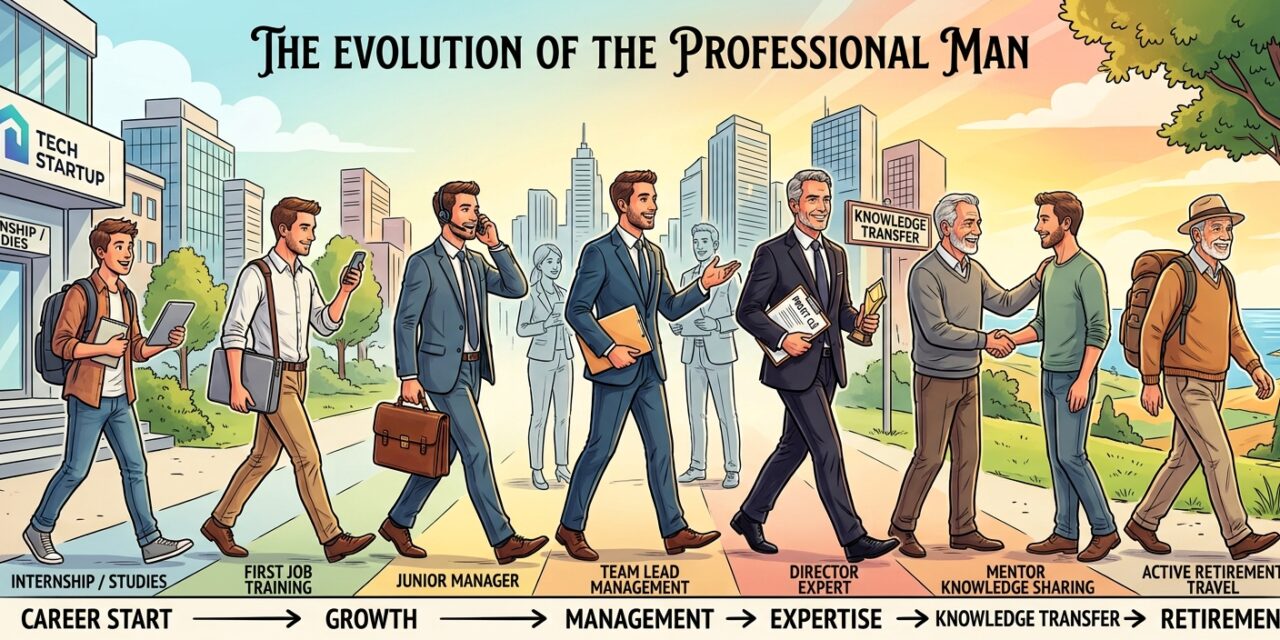
- The Shift in the Life Cycle: The time spent in retirement has literally exploded! Originally designed to cover the final years of life, retirement has become a fully-fledged stage of life, sometimes lasting three or even four decades. Cases of retirees spending more time receiving a pension than they spent working—and thus contributing—are multiplying, making the core problem glaringly tangible.
Faced with this imbalance, the equation has simply become impossible: raising contributions chokes the competitiveness and purchasing power of active workers. Lowering pensions is politically non-viable—or at least so dangerous that no politician dares to say it out loud. As for raising the legal retirement age, while it helps, it merely postpones the inevitable without solving the underlying equation.
2. The Core Issue: Redefining the True Nature of “Retirement”
We must return to the original meaning of “retirement”.
In its original spirit, one “retires” when one can no longer earn a living through work. It was conceived as an insurance policy against incapacity due to old age or physical wear and tear—not as a generalized paid vacation (or worse, a “Long Summer Holiday” at the taxpayer’s expense!) guaranteed by the State for the last third of one’s life.
In that original spirit, when an individual reaches this limit at the end of a working life, intergenerational solidarity takes over: the generation of children and grandchildren supports the income of seniors through the direct fruits of their labor.
This realization reintroduces an often overlooked anthropological dimension: the dependence of pensions on generational renewal. For a society to support its elders when they can no longer produce, it must have raised, educated, and prepared a sufficient population of working youth. In other words, long-term balance depends not only on paychecks, but on family care, transmission, and local community solidarity. Finding oneself dependent at the end of life without having contributed to the demographic or social continuity of the community undermines the very viability of intergenerational support.
3. The Illusion of “Acquired Rights” and the Need for a New Modus Vivendi
Today’s debate is distorted by a fundamental misunderstanding. A large majority of current retirees remain convinced that they have earned a direct “right” to their pension under the pretext of having “contributed all their lives”.
This needs to be stated clearly and repeatedly on every platform: from both a technical and legal standpoint, this belief is false. In a pay-as-you-go system like France’s, past contributions from today’s retirees were not placed in a savings account; they were immediately spent to pay the pensions of their own parents and grandparents. The money a senior receives today does not come from their own past payments, but directly from the current work of young active employees.
This gap between financial reality and perception creates a major generational rift:
- Over-burdening Younger Generations: To maintain the relative standard of living of current retirees, the system levies an ever-increasing share of the wealth created by workers, through social contributions, taxes, and public debt (which finance the structural deficits of the public sector and special pension schemes).
- The Risk of Breaking the Social Contract: By placing a disproportionate financial burden on young people—who already face housing difficulties and job insecurity—society risks sabotaging its own capacity for investment and innovation.
4. Conclusion: Finding a Path Forward
To prevent a generational conflict that would damage national cohesion, establishing a new modus vivendi is urgent. This requires clearly redefining everyone’s responsibilities:
- Protecting Active Workers: Capping the overall financial burden on working generations to allow them to build their own savings, invest, and raise their children. This requires either reducing pension payouts or increasing retirees’ contribution to funding their own retirement—whether through taxation, a later retirement age (which turns a cost into a contributor, killing two birds with one stone!), or other forms of national solidarity. For instance, society could quantify or “monetize” the extensive time grandparents spend caring for grandchildren or their massive involvement in volunteer work.
- Targeting Solidarity: Refocusing national solidarity on its core purpose—guaranteeing a decent income to those who genuinely can no longer work—while encouraging greater individual responsibility in planning for the end of one’s career.
Only an uncompromising clarification of what “retiring” actually means will allow France to break out of the current stalemate and build a sustainable economic model.